The Serengeti is legendary. Its name alone evokes open plains, big cats, migration herds, and cinematic horizons. And in many ways, it delivers exactly that with its vast skies, incredible wildlife, and the scale of nature at its most dramatic.
But it also revealed something else: the growing tension between conservation and tourism, and how quickly a place can shift from wilderness to something that feels uncomfortably close to a zoo.
This was the part of our trip that left us with mixed emotions - awe, gratitude, sadness, and a renewed understanding of our own travel ethos.
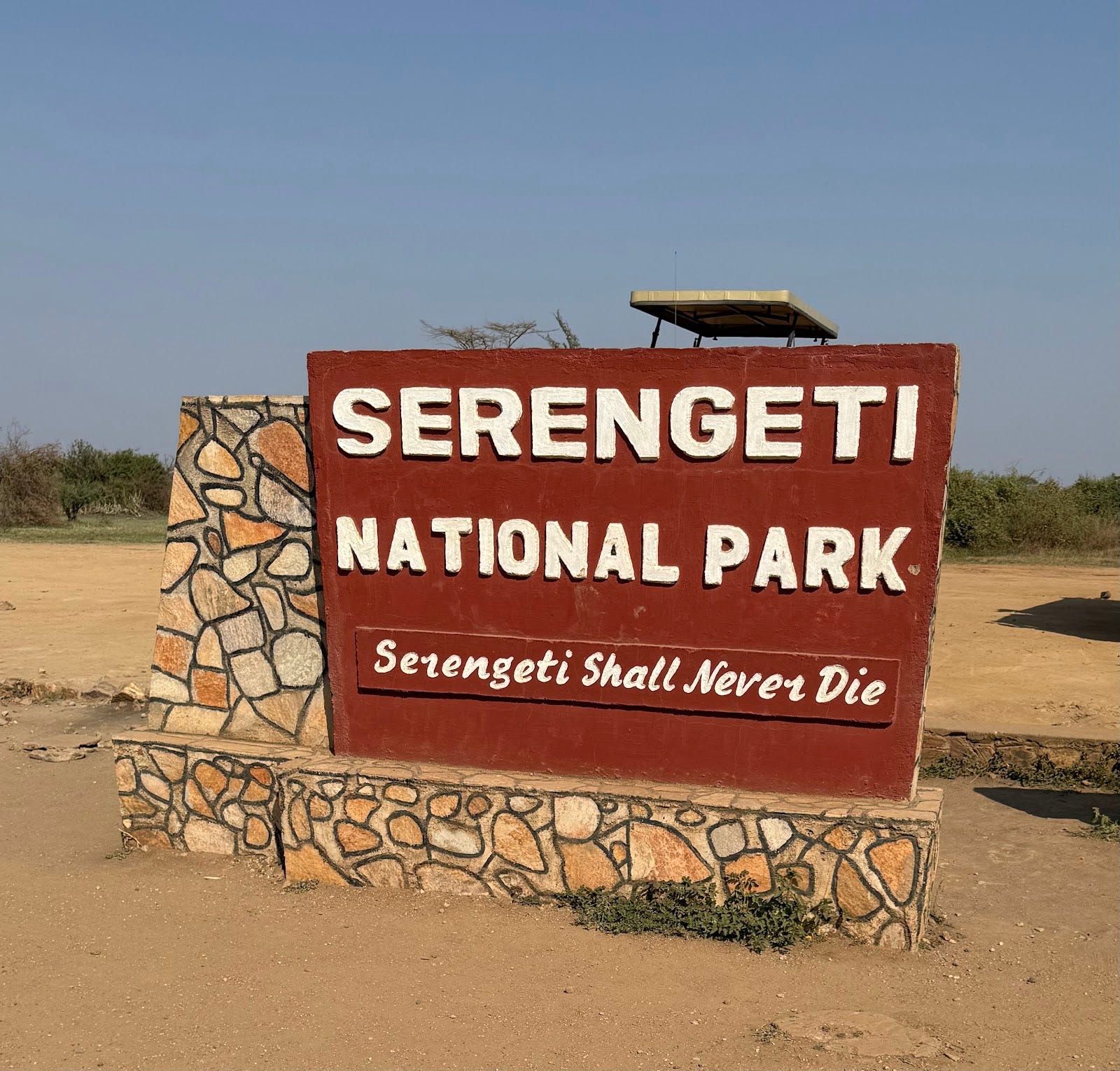
🚐 Entering the Serengeti: Dust, Scale, and a Complicated Visit to a Maasai Village
We left Octagon Lodge around 8:30am, heading deeper into the plains. The Serengeti is exactly what you imagine - endless, dusty, wide open, the light shifting across the land in refracted ribbons.
🦁 Day 1: Lions, Cheetahs, Jackals, and a Harsh Lesson
Once inside the Serengeti, the wildlife sightings came quickly:
• A pride of lions resting in the heat
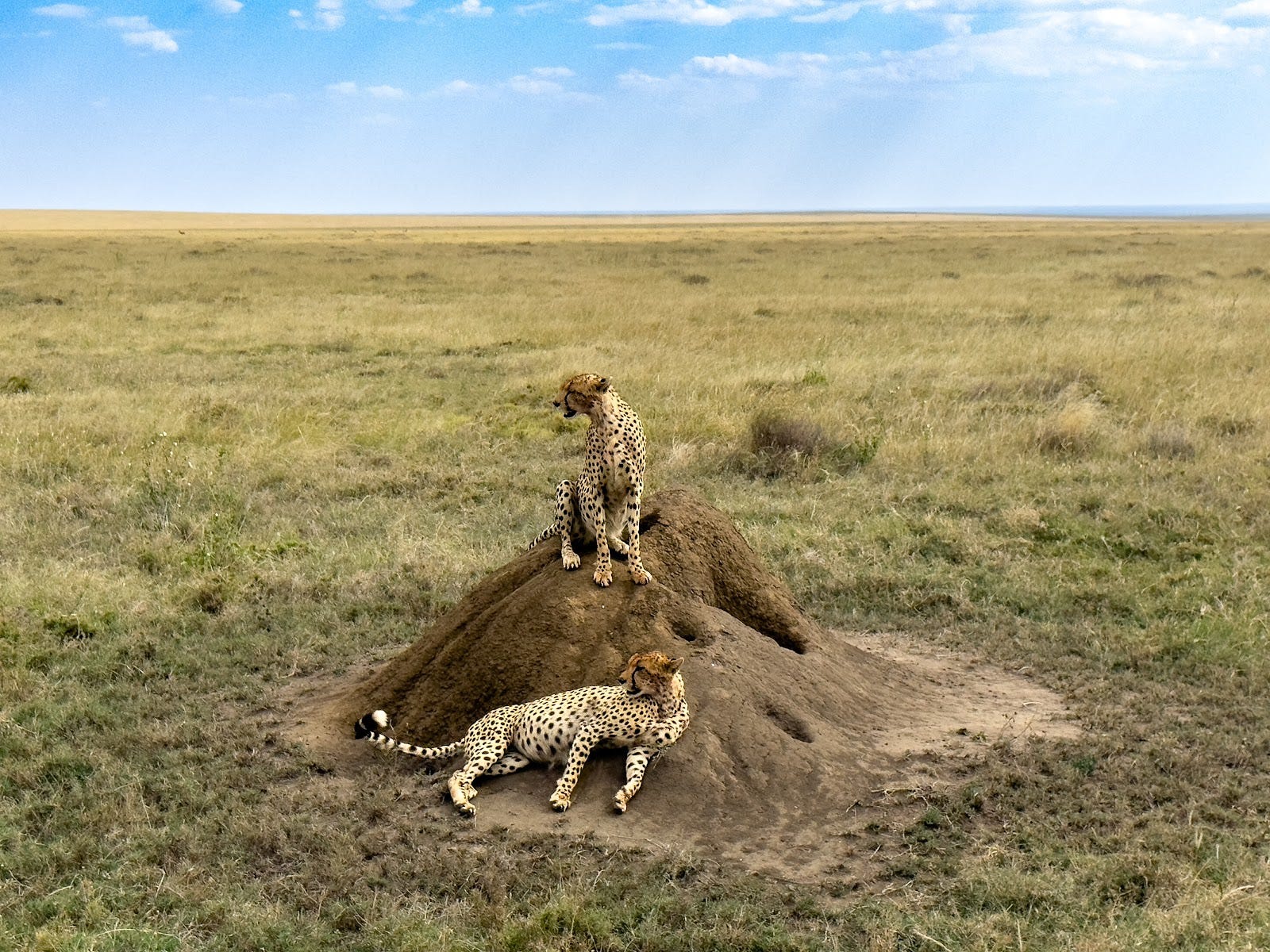
• A coalition of three brother cheetahs
• Secretary birds striding like feathered bureaucrats
• Eagles scanning the plains
• A lion mating pair in the grass
But the moment that defined the day came unexpectedly.
We watched a jackal hunt and kill a newborn antelope, just minutes old, still unsteady in its first steps. The parents tried to defend it, circling and charging, but the jackal persisted. Nature didn’t soften the scene for us. It was difficult to watch and a good reminder of how brutal life can be in some of the wildest places on Earth.
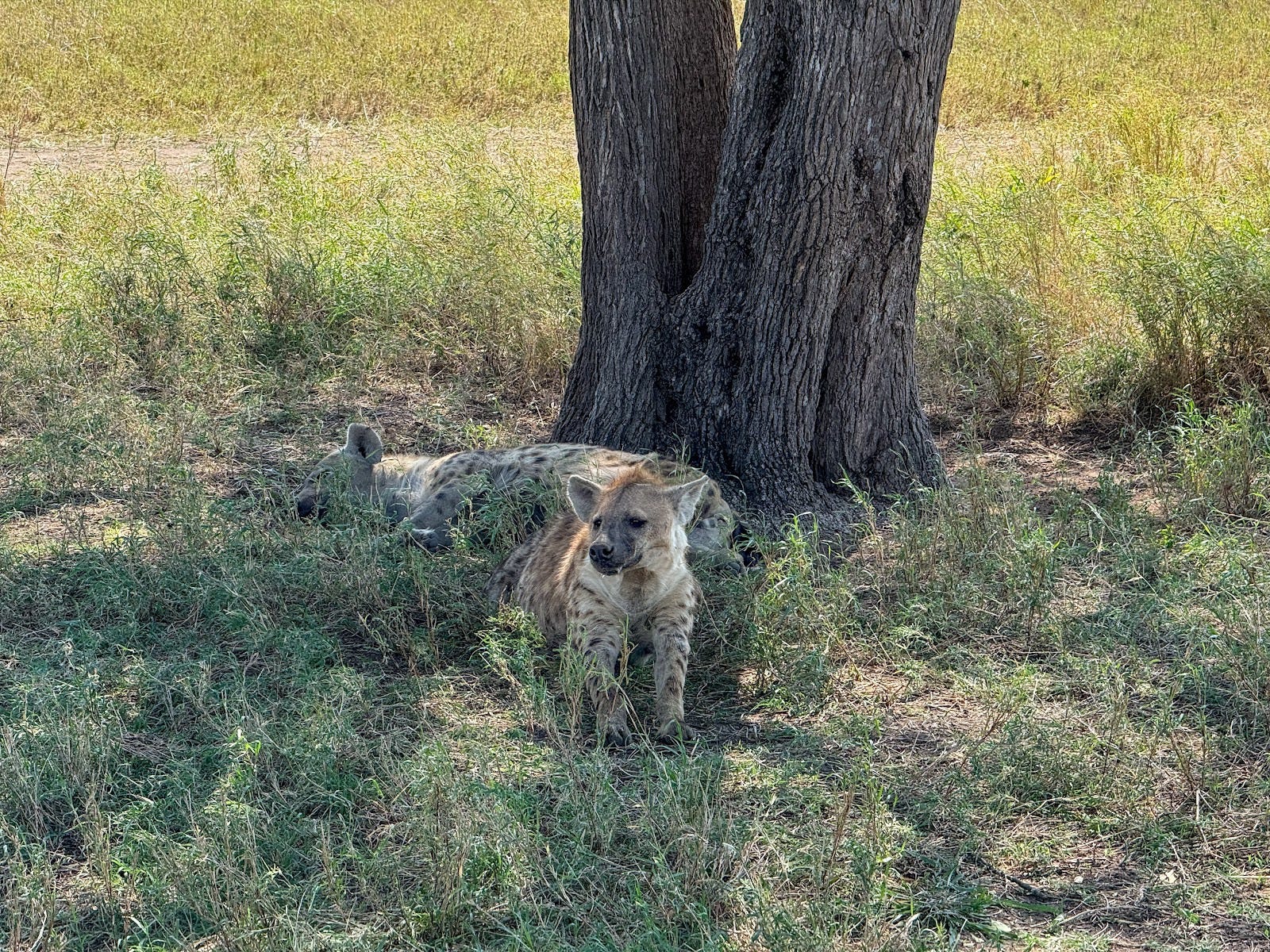
We reached Heritage Camp that night. Our first impression was lukewarm, but as darkness fell and the sounds of hyenas echoed across the plains, the camp took on a more atmospheric feel. Sometimes comfort and character do not arrive at the same time and this place had plenty of the latter.
🐆 Day 2: Leopard Cubs, Lion Kings, and a Cheetah Kill
Day 2 was nonstop:
• Hot air balloons floating at sunrise
• Leopard cubs playing on a rocky outcrop, mother hidden away
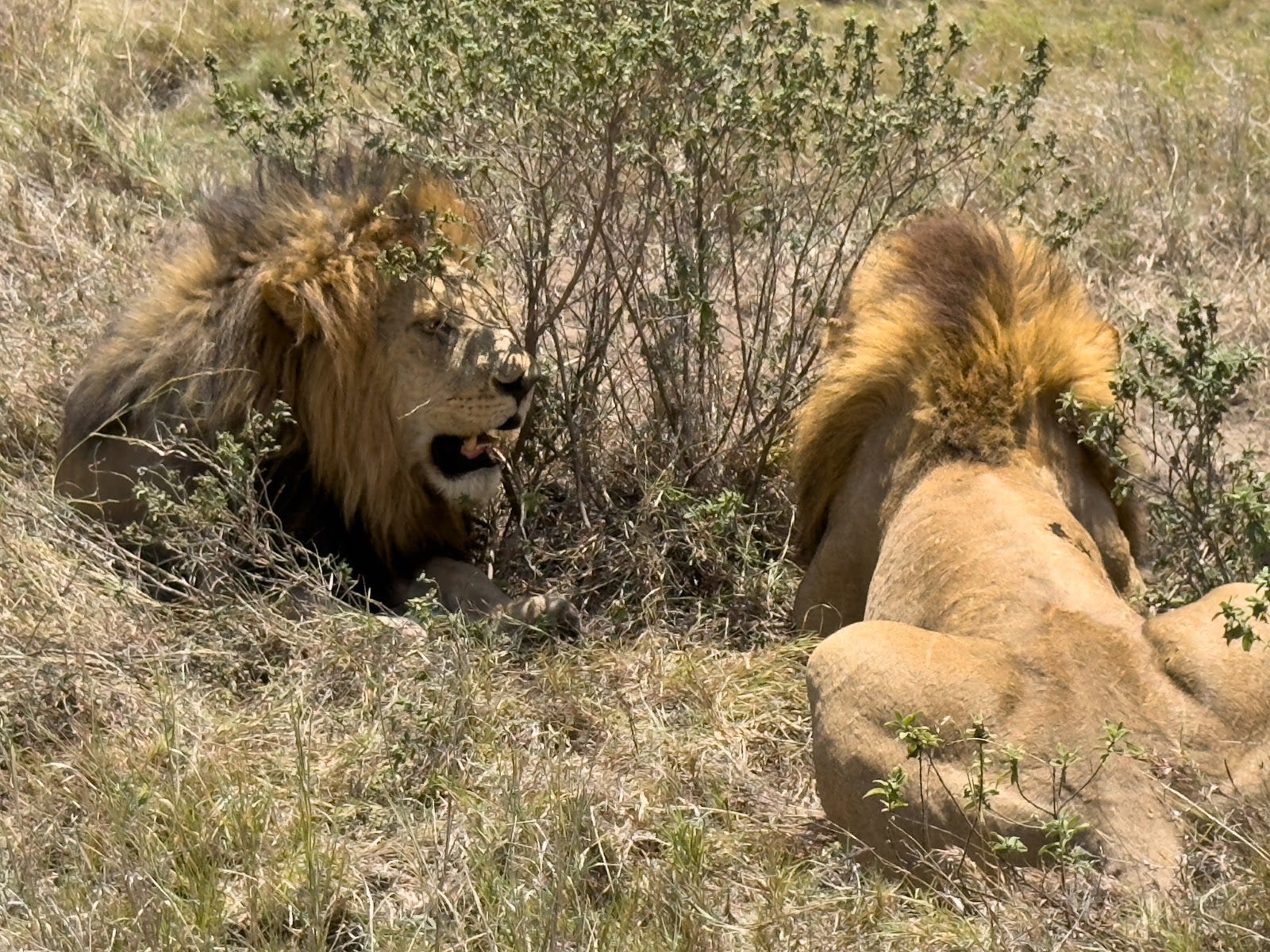
• Four male lions lounging together
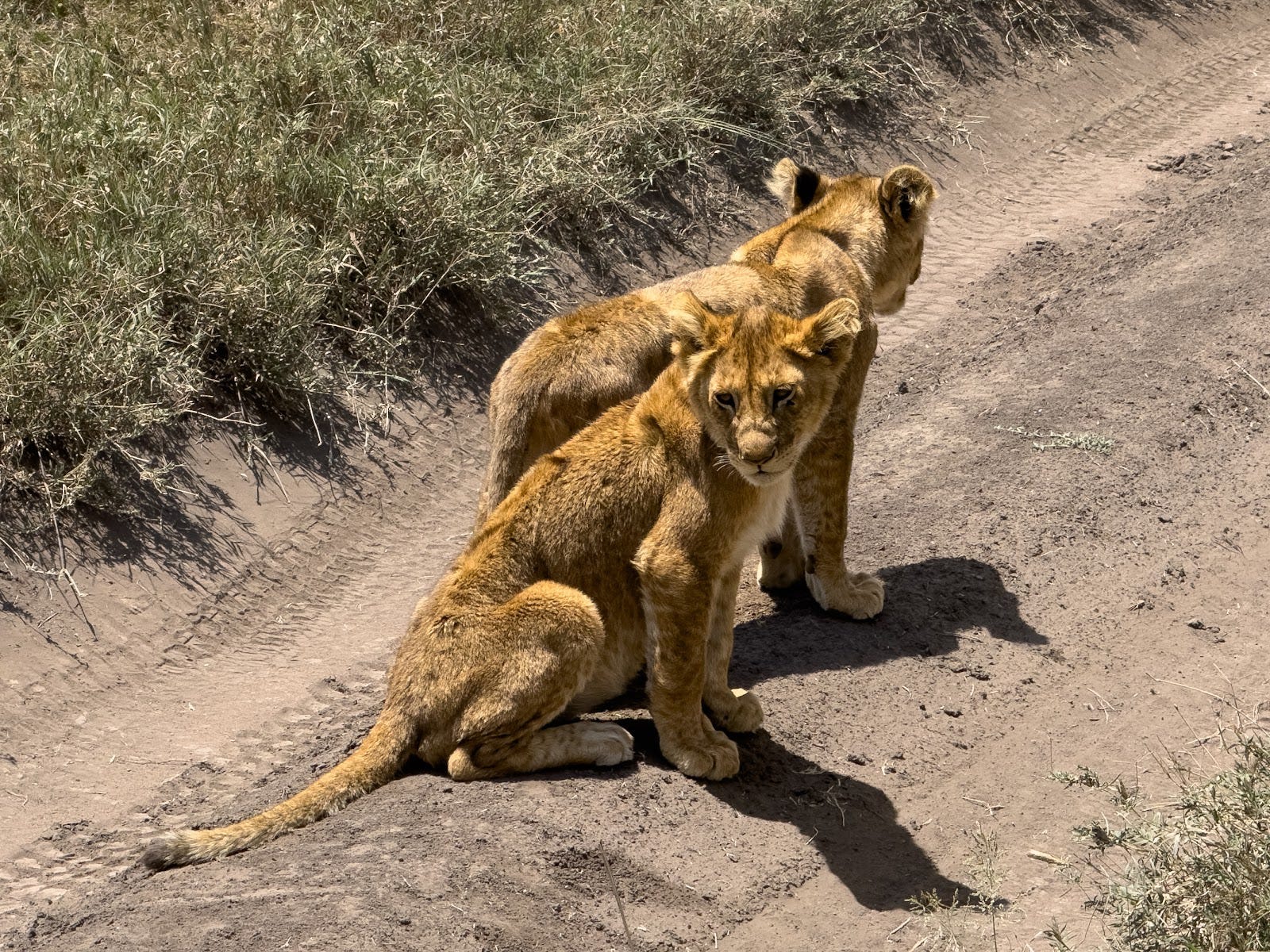
• Three cubs warming themselves on the road
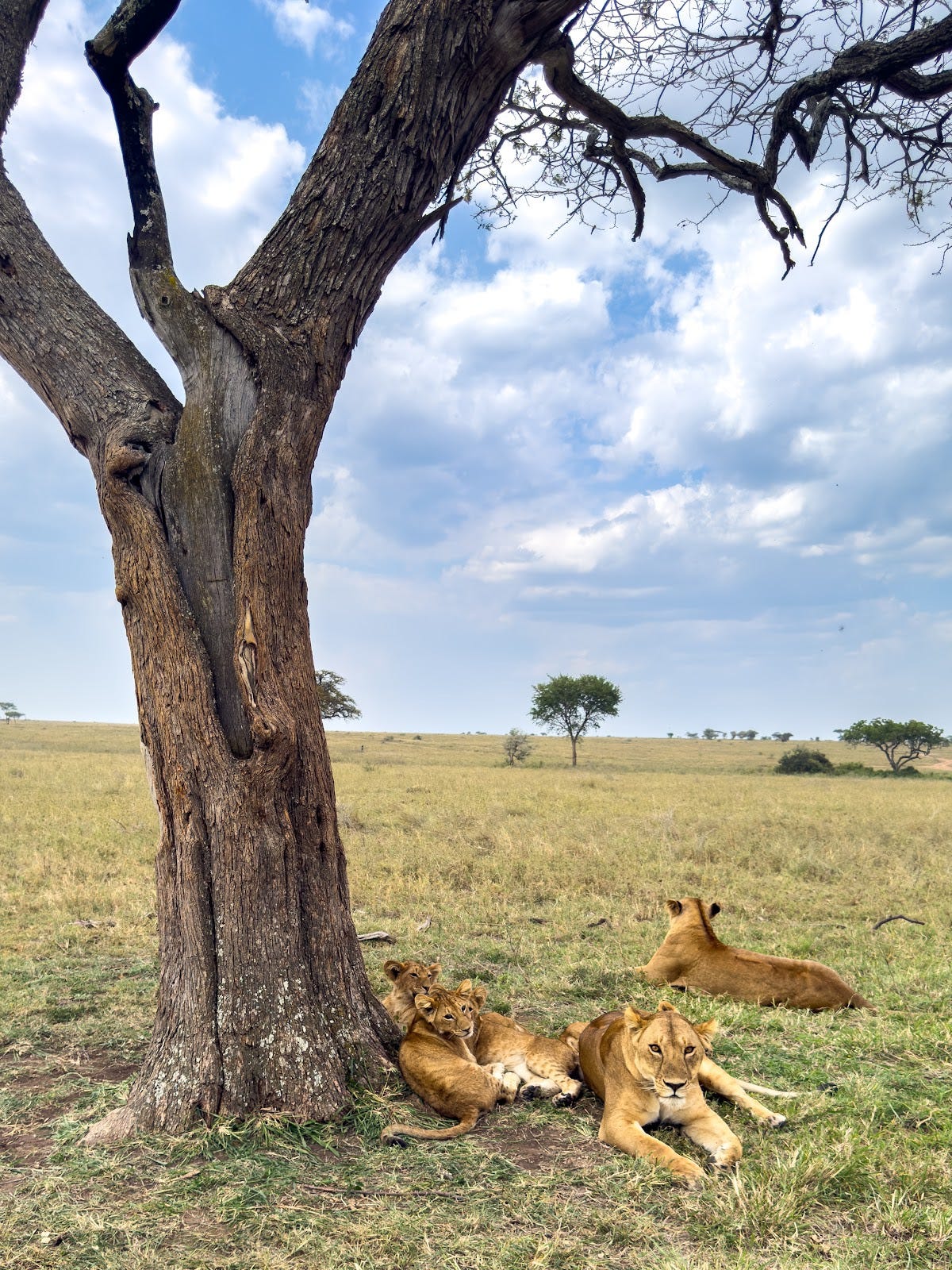
• A huge pride resting under a single tree
• A cheetah seconds after a successful hunt
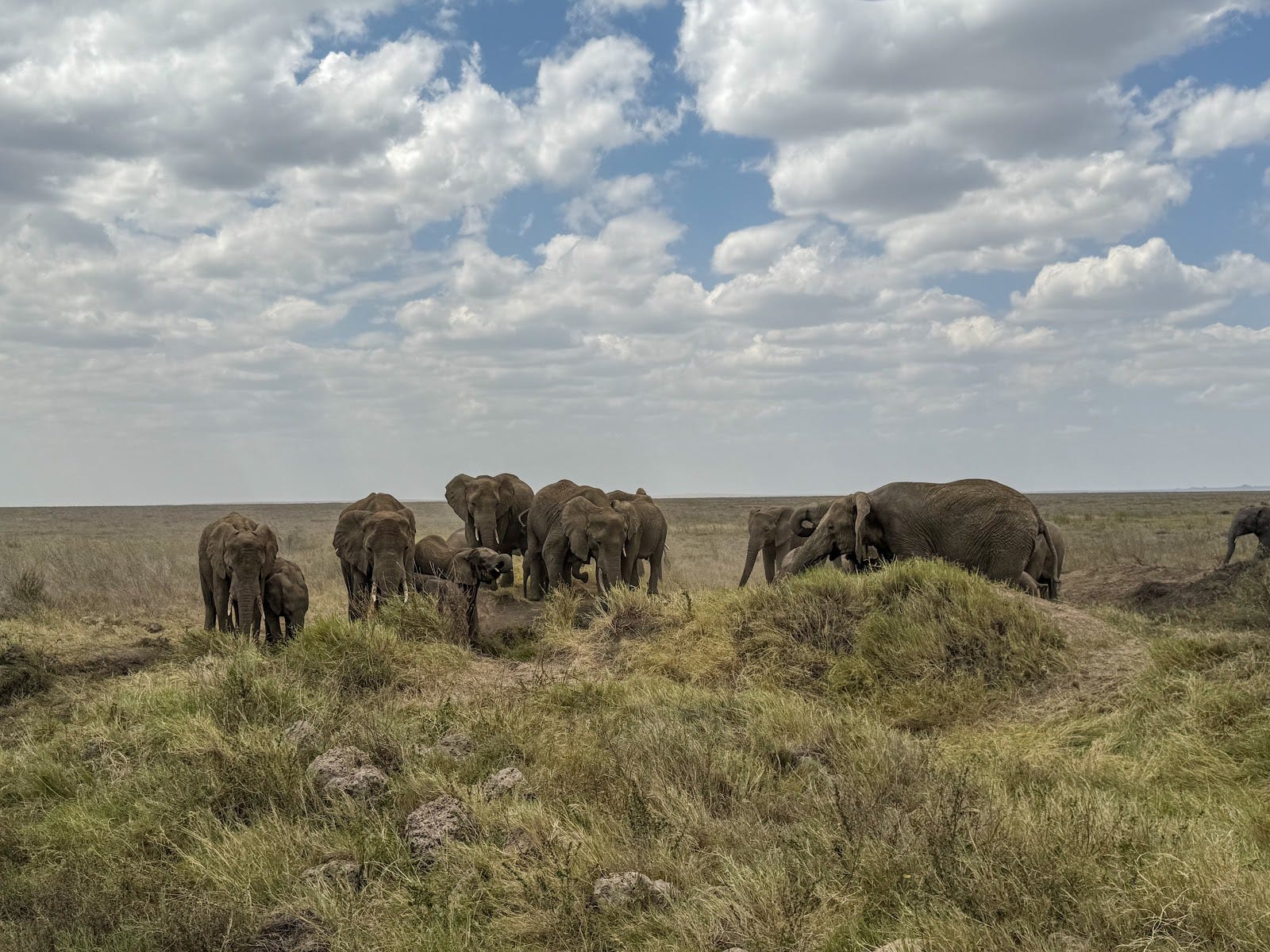
Later in the day a group of elephants reacted to bee stings and one of them hesitated and studied us in a way that made its intentions unclear. The driver put the car in reverse and floored it.
Overall, it was one of the richest wildlife days we have ever experienced. A day where wonder outweighed anything else.
🦛 Day 3: Hippo Pools and an Evening of Dance
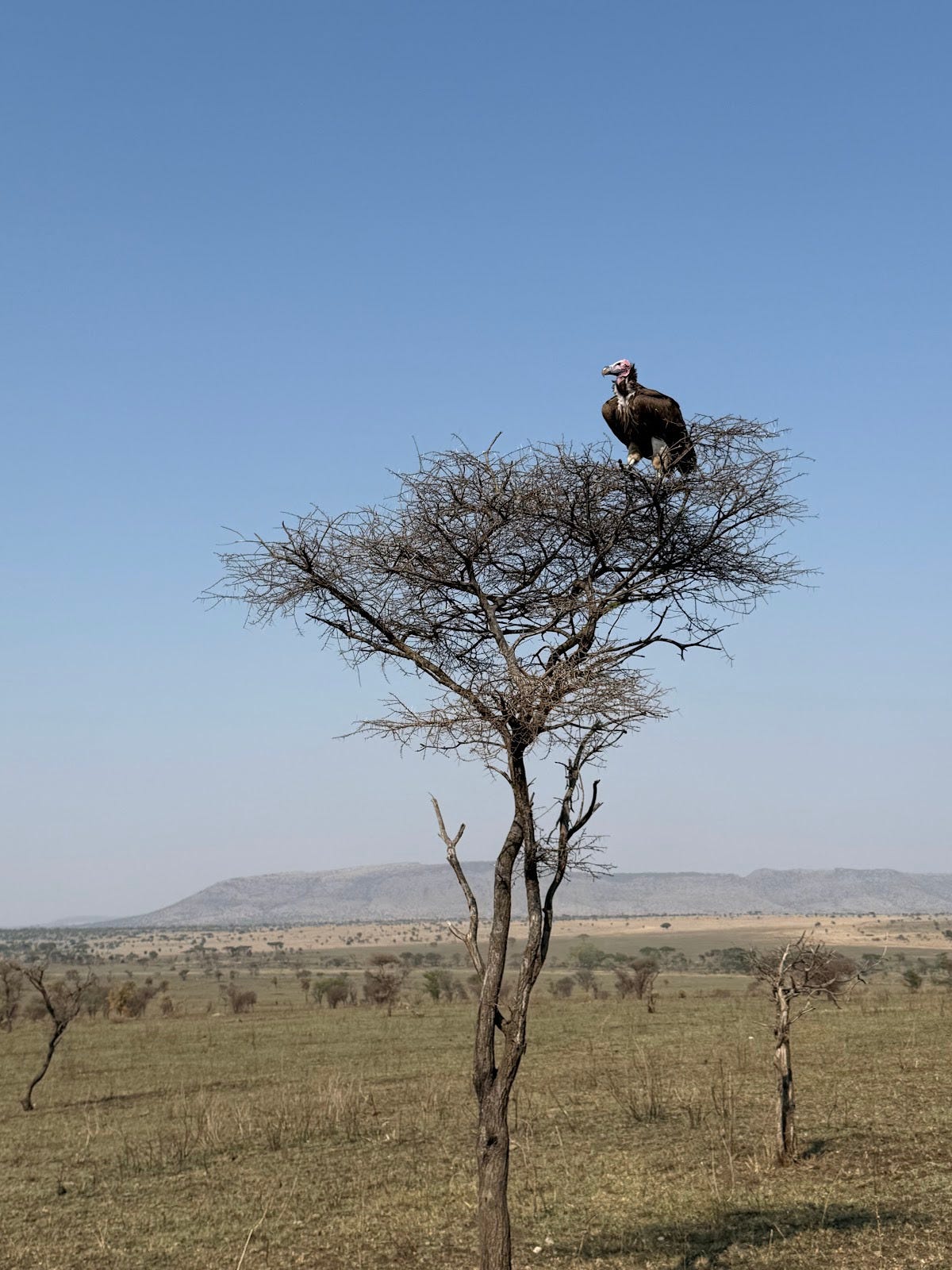
It was a long day of travel as we left central Serengeti for the north. The road to the north was no less exciting and raw with the presence of wildlife. We passed a pride that had just killed two zebras, including a pregnant female. The vultures and jackals were already in position ready to make use of what the lions left behind.
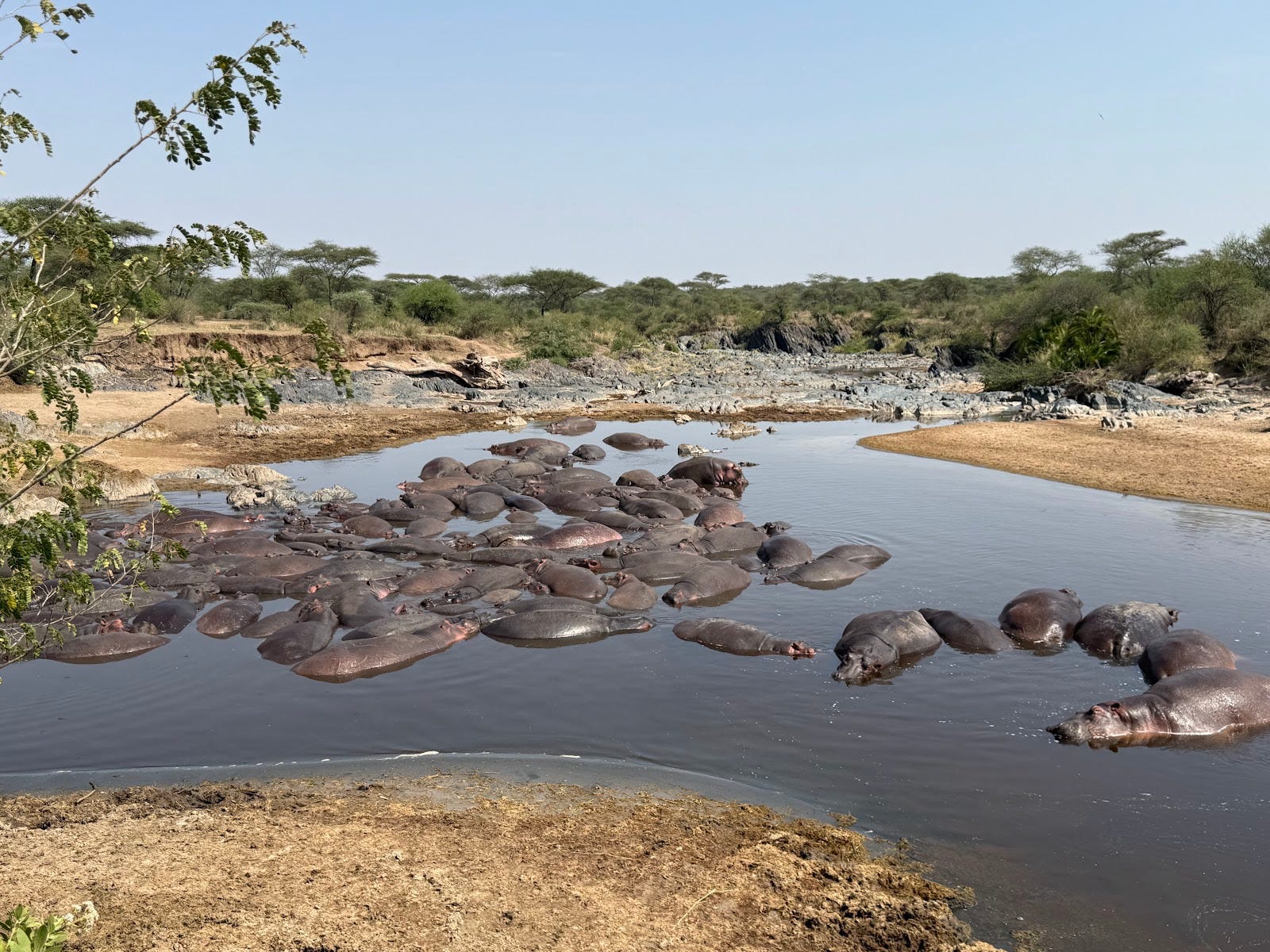
We continued on to the hippo pools, dozens of hippos piled together in the murky water napping, snorting, nudging.
By evening we arrived at our next camp and watched a local acrobatics group perform. It lightened what had been a heavy morning.
🦓 Day 4: The Great Migration Crossing - Awe and Unease
This was the day we had pinned so much hope on: seeing the wildebeest cross the Mara River. A bucket list item for everyone who comes to the Serengeti but one that only a few ever get to see. And we did - but it wasn’t the experience we imagined.
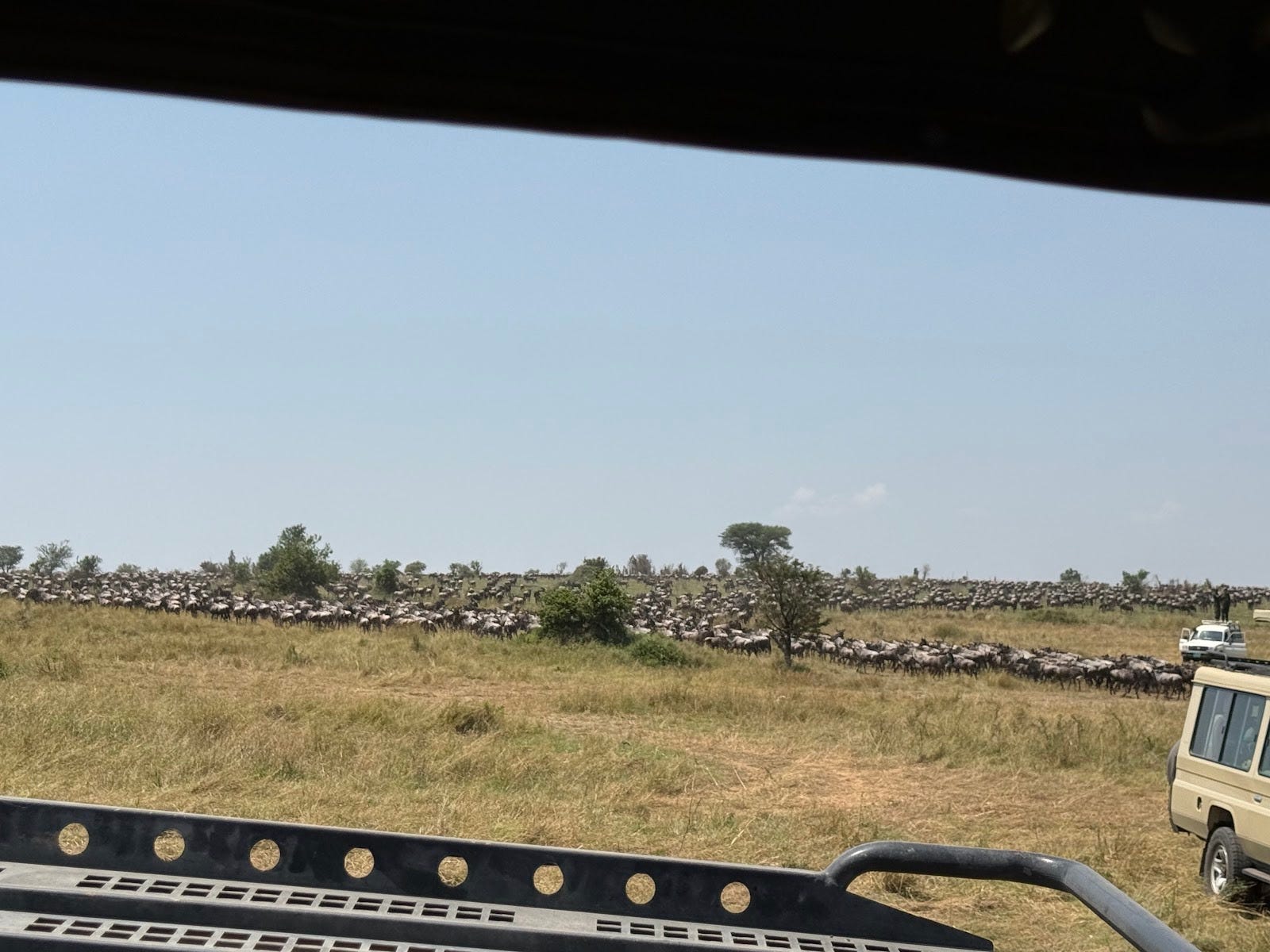
We got near the banks of the river and waited. Shortly after, the first herd of wildebeest approached, hesitated, and turned back several times because vehicles were too close. When it seemed like the herd was ready to cross, more trucks came over spooking the animals. This happened for a while until the herd finally crossed. Descriptions do little justice to a herd of 5,000+ wildebeest crossing the river. When about half the herd had crossed, a cluster of trucks repositioned themselves right at the crossing point and the herd panicked. Many turned around, trying to reunite with the rest of their group. We stayed put, resisting the urge to chase the perfect vantage point. It was intense, to say the least, to see thousands of animals crossing back to reunite with the herd and go through the treacherous process of crossing the river filled with crocodiles yet again. The toll was visceral and visible.
That day, so many wildebeest were killed that it seemed like the crocodiles were hunting for sport and not food. The river was filled with wildebeest bodies and you could see the sky filled with vultures in a column mile high.
This wasn’t the migration of documentaries anymore. This was a migration navigating traffic and humans. We felt lucky to witness it but also deeply uneasy by how clearly tourism was impacting an already stressful and dangerous event for these animals.
Reflections
We left the Serengeti with mixed emotions. The wildlife was extraordinary and we are grateful to have seen it. At the same time, the crowding and pressure from tourism were undeniable. Much has changed even since 2018 and the Serengeti now feels closer to a managed wildlife exhibition than the wilderness it once was. We were glad to go once. We also knew we would likely not return in the same format, because the experience no longer aligns with our travel ethos.